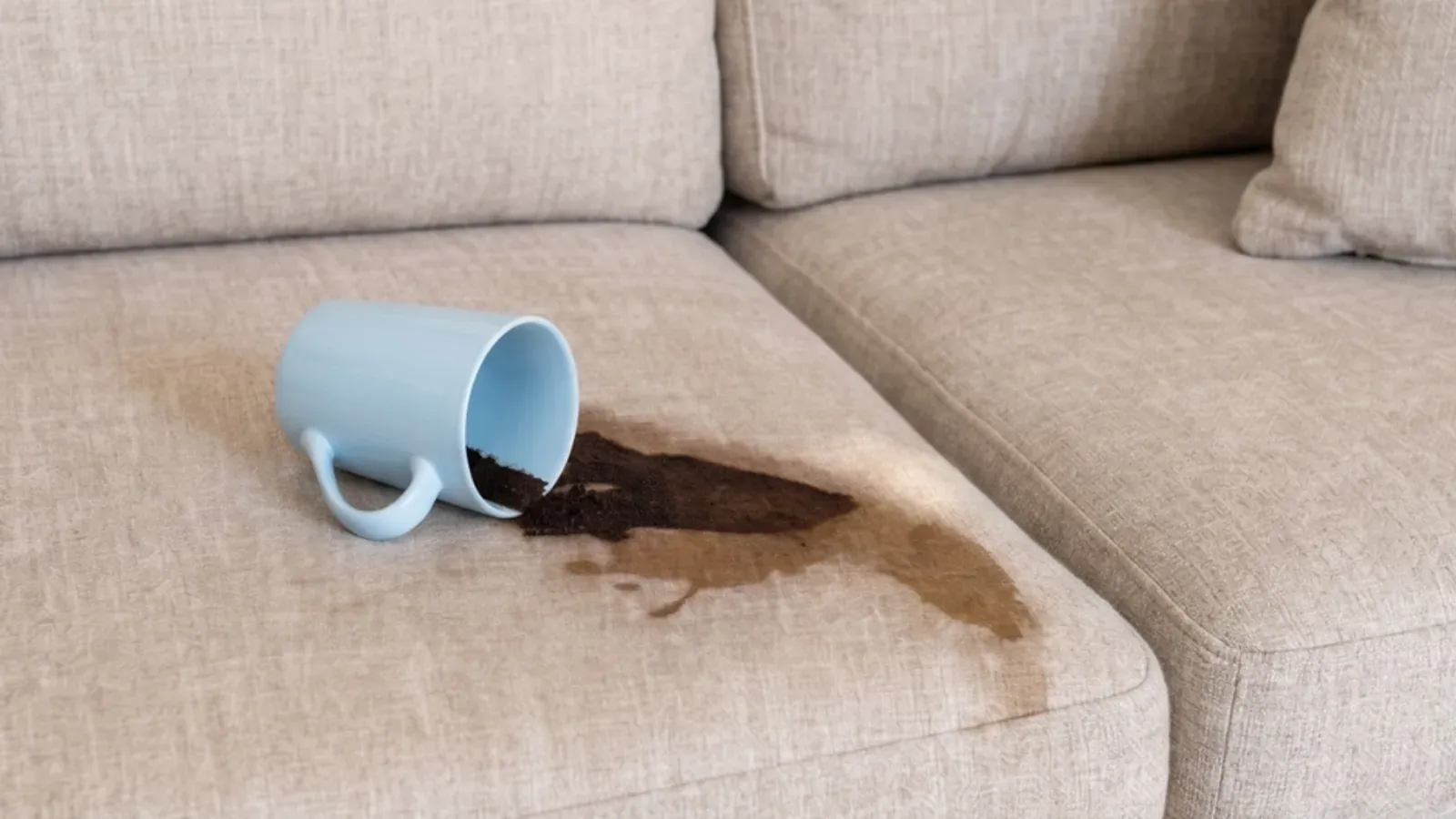
Coffee Spilled on Your Sofa? What to Do and What to Avoid
Coffee spills on a sofa happen easily. The first reaction is often to grab the nearest cloth and start rubbing. The instinct is understandable, but the first minutes matter more than most people expect — and this is also when the stain can accidentally be made harder to treat.
What you do next depends on three things: the fabric the sofa is made of, what was actually in the cup, and how much liquid made it past the surface. This guide walks through what to do, what to avoid, and when a professional assessment is worth considering.
In the first minutes: blot, lift, repeat
Start with a clean, dry, absorbent cloth or plain white paper towels.
Press the cloth onto the spill and lift it away. No rubbing, no scrubbing. Work from the outside edge of the stain toward the centre so the coffee does not spread outward. Move to a dry section of the cloth as it absorbs, and keep going until the cloth comes away mostly dry.
Use gentle, controlled pressure and lift rather than rub or scrub. Aggressive pressing or rubbing can spread the liquid and work it deeper into the fabric, and deeper is where a stain becomes harder to reach.
Why blotting is safer than rubbing
Rubbing works the coffee into the weave of the fabric and can push it toward the padding underneath. It can also fray fibres and roughen the surface, especially on soft or textured upholstery.
A stain that stayed on the surface is far easier to work with than one that has been rubbed through the fabric. Blotting lifts liquid away instead of working it in, which is why it is the one step that helps on almost any type of upholstery.
Read the care label before introducing anything wet
Many upholstered pieces have a care label or cleaning code, often found under a cushion or beneath the furniture. The code matters more than any general advice:
- W — water-based cleaning methods are allowed.
- S — do not use water; only a water-free method consistent with the manufacturer's instructions.
- W/S — either water-based or water-free methods may be used.
- X — no liquid cleaning of any kind; vacuuming and approved dry methods only.
If the label says X, if you are not certain how to treat an S-coded fabric, or if there is no label at all, resist the urge to experiment at home. That is the point where a professional assessment is the safest next step.
Why the Upholstery Fabric Matters
The same coffee, in the same quantity, does not produce the same result on every sofa. A tightly woven synthetic fabric absorbs differently from an open-weave natural fibre. Dye stability varies too — some fabrics react to moisture with rings or colour transfer, even when the liquid itself is plain water.
That is why the same result cannot be promised on every sofa. The fabric is part of the equation, not just the spill.
Why too much water creates its own problems
A cushion is made of several layers: the fabric you see, padding, and foam. Liquid that passes the surface dries slowly deep inside those layers.
That is where new problems start. A damp area can leave water rings along its edges as it dries. Discolouration can migrate back toward the surface — a phenomenon sometimes called wicking. And if a cushion stays damp long enough, it can develop a musty smell that has nothing to do with the coffee.
If the care instructions allow dampening, use the minimum moisture possible, test in a small inconspicuous area first, and let everything dry thoroughly.
What to avoid after a coffee spill
- Rubbing or scrubbing the mark.
- Pouring water or any other liquid directly onto the cushion.
- Household cleaning products or home mixtures that were not made for upholstery. They can leave residues in the fabric, which can make a later professional treatment less predictable.
- Hair dryers, irons and steam, unless the manufacturer's care instructions specifically allow them. Direct heat can damage heat-sensitive upholstery.
- Coloured cloths, which can transfer their own dye onto the upholstery.
- Waiting. A dried coffee stain does not behave like a fresh one.
Fresh spill or dried stain?
In a fresh spill, a good portion of the liquid is still water-soluble, which is why blotting does real work. What remains is the colour. Coffee and tea belong to a category of stains related to tannins — plant compounds that act as natural dyes.
What was in the cup also matters. Milk or cream adds proteins and fats that behave differently from the coffee itself, and over time a spill that contained milk can develop a different kind of mark or odour.
Once coffee has dried, residues remain in the fibres and the stain may become more difficult to treat, especially after previous cleaning attempts. An old coffee stain is not simply a dry version of a fresh one; it needs a different approach.
When professional cleaning is worth considering
A professional assessment is reasonable when any of these apply:
- The mark is still visible after drying, or a ring has appeared around it.
- The fabric is coded S or X, or has no care label.
- The spill was large and likely reached the padding.
- The stain is old, or home attempts have already been tried.
- You are not sure what you are dealing with.
Send clear photographs of the whole piece and close-ups of the affected area before booking. Good photos help the assessment happen before anyone arrives.
What to expect from a professional cleaning
The result depends on the fabric, the age of the stain, how deeply it penetrated, what was in the cup, and any previous cleaning attempts. Coffee marks may improve with professional treatment, but complete removal cannot be promised on every fabric.
TissuCare does not promise complete stain removal. The condition is assessed first, so you know what is realistic before any work begins.
If the mark is still visible after first aid, or the spill is older, professional sofa cleaning may be the next step.
Frequently asked questions
Can a fresh coffee stain be treated at home?
A fresh spill often responds better to simple steps than an old one: blot the liquid with a dry absorbent cloth and check the care label. If the care instructions allow water-based cleaning, use only minimal moisture and test first in an inconspicuous area. Whether the mark disappears completely depends on the fabric and how quickly the spill was blotted. If a ring or discolouration remains after drying, that is a sign to consider a professional assessment.
What should I never do after a coffee spill?
Avoid rubbing or scrubbing the fabric, pouring water or other liquids directly onto the cushion, using household cleaning products or home mixtures, and applying heat such as a hair dryer or an iron. These actions can push the coffee deeper or spread the mark, and heat can damage heat-sensitive upholstery. On an X-coded fabric, no liquid should be introduced at all. On an S-coded fabric, avoid water; if you are not certain how to treat it safely, have it assessed professionally.
Is a dried, older coffee stain harder to clean?
Generally, yes. Once coffee has dried, the stain may become more difficult to treat, especially after previous cleaning attempts. Older stains can still improve with professional treatment, but the result depends on the fabric, the age of the stain, and what has already been tried.
Need help with a stain on your furniture?
Send us photos for an assessment and estimate.