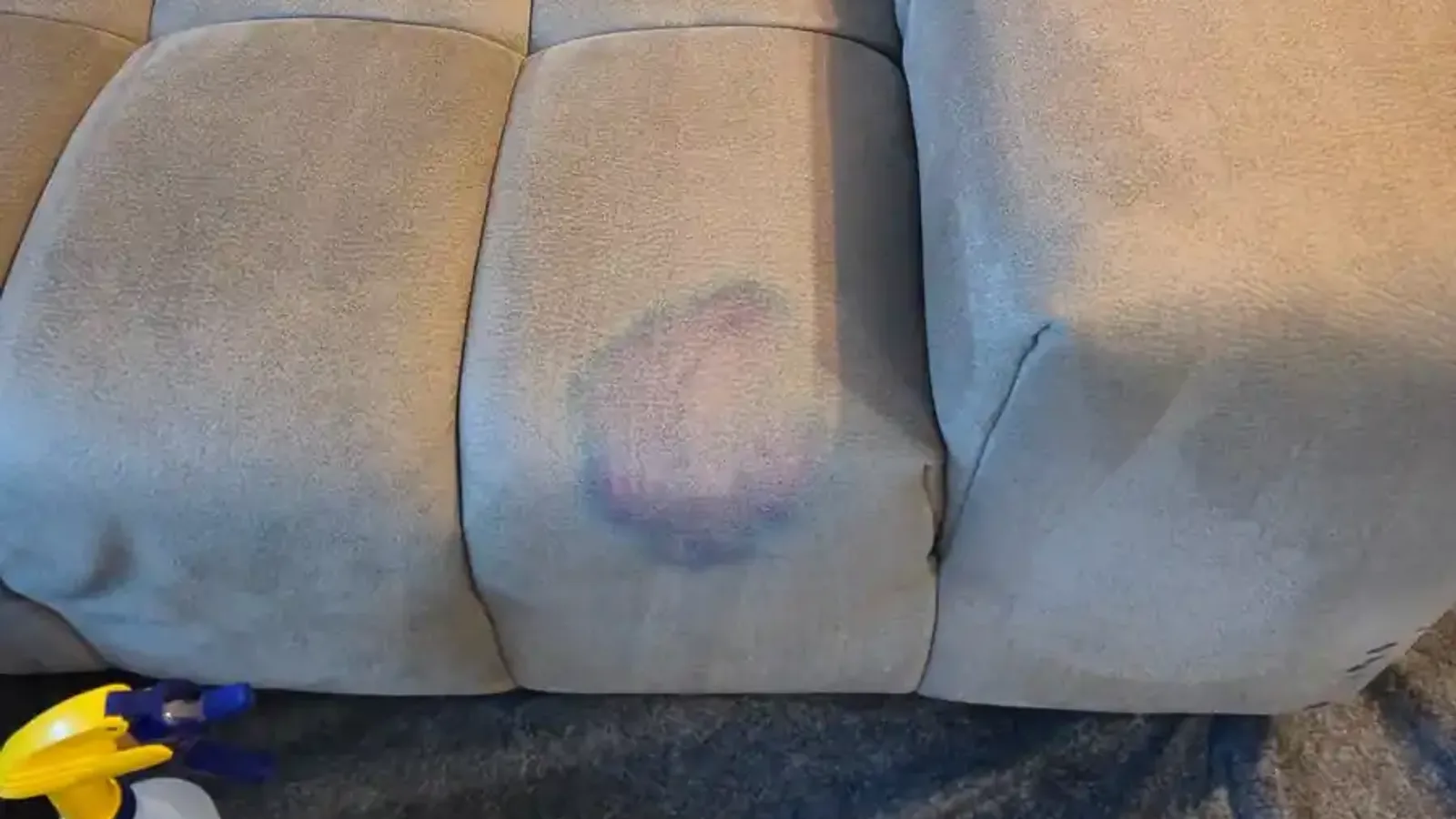
An ink stain on a sofa can look like a simple surface mark, but upholstery makes the problem more complicated. Ink can contain dyes, pigments, solvents, resins, or a mix of these, and the outer fabric is only one part of the furniture. The same product or technique can behave very differently on two sofas.
The photos in this article show a real TissuCare job in Montreal. The visible coloured mark was treated as an ink stain on a light upholstered sectional. These images are one example of what can be achieved in a favourable case, not a promise that every ink stain will respond the same way.
Why ink stains are difficult on upholstery
Ink does not behave like ordinary dry soil. Once it reaches upholstery, colour can spread through the fibres or migrate when the area is wetted. Previous home-cleaning attempts can also change the stain before a professional sees it.
The result depends on several things:
- the upholstery fibre and finish;
- the type and amount of ink;
- how long the stain has been present;
- whether it has already been rubbed, scrubbed, heated, or treated with another product;
- the stability of the sofa's own colour;
- how deeply the contamination has travelled below the visible surface.
That is why an ink stain should not automatically be treated as a routine sofa-cleaning spot.
What should be checked before treatment
The first priority is to understand the material and the condition of the stained area. A professional assessment should consider the manufacturer's care information when available, the fabric's reaction to moisture, and colour stability in an inconspicuous area.
The purpose of this inspection is not only to find something that dissolves the stain. It is also to avoid creating a larger problem, such as colour loss, a water ring, distortion of the pile, or spreading the ink into a wider area.
When the exact ink formulation is not known, a cautious, progressive approach is safer than immediately using the strongest available stain remover.
A real TissuCare example
The before photo below shows a clearly visible coloured ink mark on one seat section of a light sofa. The after photo was taken after the cleaning work and shows the same seating area without the obvious coloured mark seen before treatment.
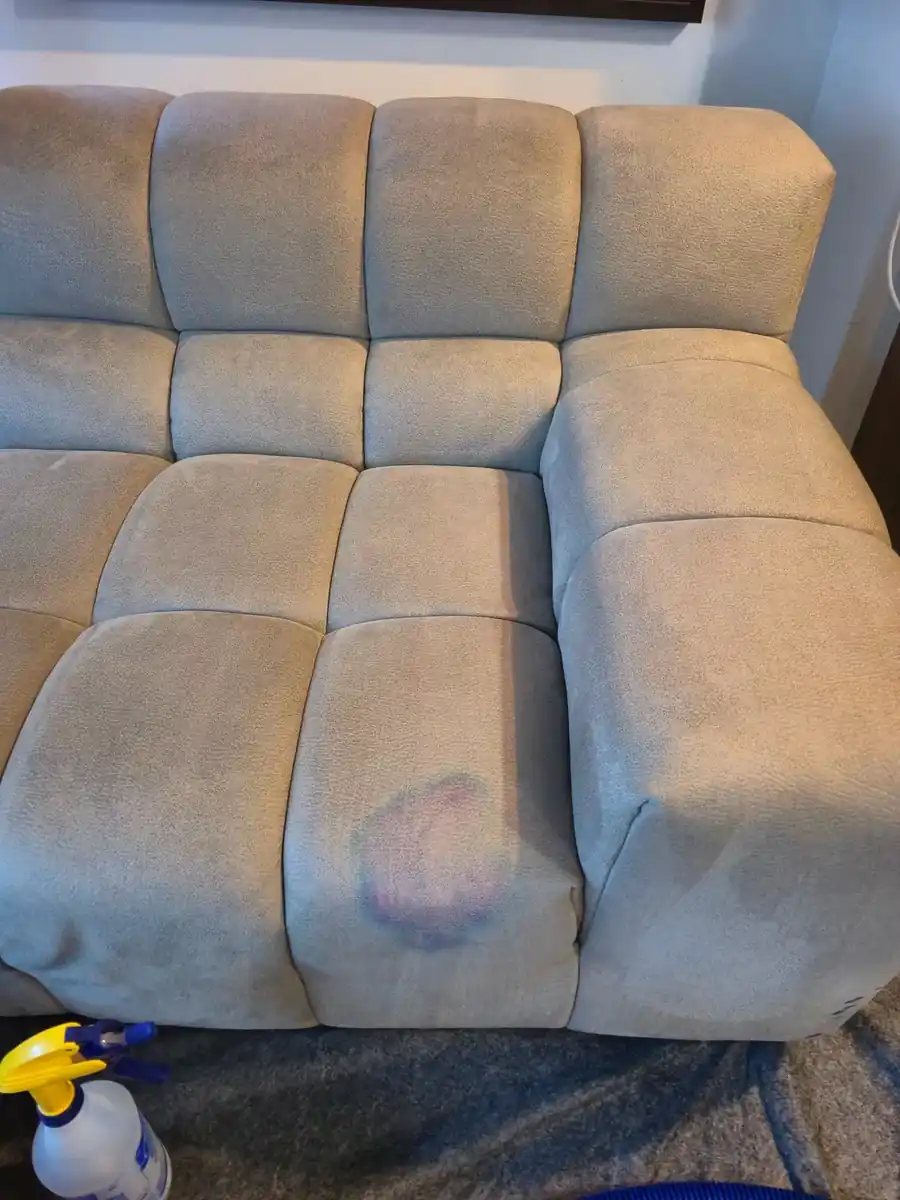
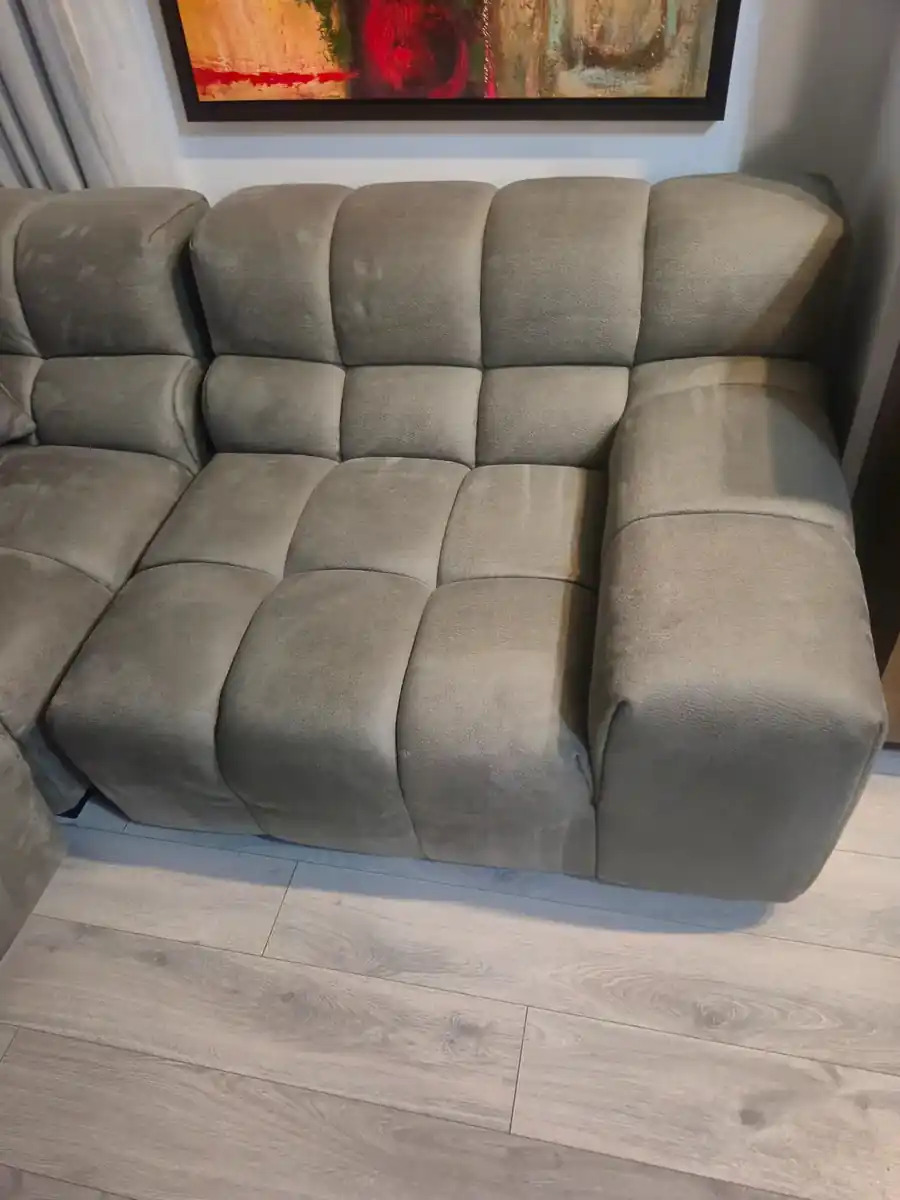
This was a successful visual result in this specific case. It should not be read as a guarantee for another sofa. Ink chemistry, fabric construction, stain age, previous treatment, and permanent dye damage can all change what is realistically possible.
Why rubbing or experimenting at home can make the job harder
A common reaction is to scrub the spot or apply a household cleaner until colour starts moving. With ink, movement is not always a good sign. It can mean that dissolved colour is spreading into clean fibres.
If an ink spill has just happened, the safest immediate action is usually to avoid rubbing and avoid saturating the cushion. Blotting loose liquid with a clean absorbent white cloth may help on some fabrics, but the furniture care instructions still matter. Do not mix household products or keep adding water when you do not know how the fabric will react.
If the stain is already dry, repeated home treatment may make a later professional assessment more difficult because the original stain has been mixed with residues from other products.
What professional treatment is trying to achieve
Professional stain treatment is a controlled process. The goal is to improve the visible stain as much as the material safely allows while limiting spread, residue, overwetting, and damage to the surrounding upholstery.
Depending on the fabric and the stain, that can involve localized treatment, controlled agitation where appropriate, extraction or rinsing, and repeated visual checks before deciding whether another step is justified.
The stopping point matters. Continuing to attack a faint remaining mark can sometimes create more risk than benefit. A realistic result is therefore based on both stain improvement and the condition of the fabric after treatment.
When to request an assessment
If the ink stain is large, strongly coloured, old, or has already been treated with household products, send clear photos before the appointment. Include one photo of the whole piece of furniture and close-ups of the affected area. If possible, also photograph the care label.
This gives TissuCare a better basis for explaining what looks realistic before the job is booked.
For help with an ink stain or other difficult mark on upholstered furniture, see our sofa and upholstery cleaning service in Montreal and send photos for an assessment.